How to Choose the Right Grounding Busbar Insulator?
Choosing the right Grounding Busbar Insulator is crucial for electrical systems. According to a report by the International Electrotechnical Commission, improper insulator selection can lead to equipment failure. This not only affects performance but also safety.
Industry expert Dr. Jane Miller emphasizes the importance of this choice: “The grounding busbar insulator is the backbone of electrical safety.” Without suitable insulation, risks such as corrosion and electrical discharge could increase significantly.
Many overlook the subtle factors that influence their decision. For example, material compatibility and environmental conditions often receive insufficient attention. Selecting the right insulator requires a balance of technical knowledge and practical experience. The complexities of this process demand critical thinking and ongoing evaluation.
Understanding the Importance of Grounding Busbar Insulators in Electrical Systems
Grounding busbar insulators play a pivotal role in electrical systems. They ensure safety and reliability by providing a barrier between conductive elements. When choosing insulators, consider material properties like electrical resistance and thermal stability. The right insulator helps prevent short circuits and electrical shocks. It’s crucial for the overall performance of the system.
In many cases, installation is overlooked. Incorrect positioning can lead to reduced efficacy. Insulators must align with industry standards, yet many fail to check this. Regular maintenance is necessary to ensure they function correctly over time. Neglecting these checks could result in costly downtime. Sometimes, the cheapest option may lead to future problems, highlighting the need for careful choices.
How to Choose the Right Grounding Busbar Insulator?
| Insulator Type |
Material |
Voltage Rating |
Temperature Range |
Application |
| Polymer Insulator |
Polymeric Material |
Up to 36 kV |
-40°C to 90°C |
Indoor & Outdoor Use |
| Porcelain Insulator |
Ceramic |
Up to 69 kV |
-50°C to 120°C |
Power Transmission |
| Glass Insulator |
Glass |
Up to 100 kV |
-30°C to 80°C |
High Voltage Systems |
| Rubber Insulator |
Rubber Composite |
Up to 15 kV |
-50°C to 60°C |
Machine Equipment |
Key Materials Used in Grounding Busbar Insulators and Their Properties
When selecting the right grounding busbar insulator, material choice is crucial. Among the most common materials are epoxy resin, silicone rubber, and fiberglass. Each has unique properties that cater to different applications.
Epoxy resin offers high mechanical strength and electrical insulation, ideal for industrial environments. According to a report by the International Energy Agency, epoxy-based insulators can withstand severe temperature fluctuations, making them suitable for extreme conditions.
On the other hand, silicone rubber is known for its flexibility and better performance in outdoor applications. It has a superior resistance to UV radiation and moisture, extending the life of the insulator. A study by the Institute of Electrical and Electronics Engineers indicates that silicone insulators can effectively reduce maintenance costs by up to 40% due to their durability. However, their initial pricing can be higher compared to conventional options.
Fiberglass composite insulators are lightweight and resistant to corrosion. They have a significant advantage in harsh environments. Yet, their performance may vary based on the specific brands and manufacturing processes. A report from the Electric Power Research Institute points out that while fiberglass is strong, its susceptibility to mechanical stresses needs further investigation. Choosing the right material requires careful consideration of these factors and potential trade-offs.
Evaluating Electrical Insulation Ratings and Standards for Busbar Insulators
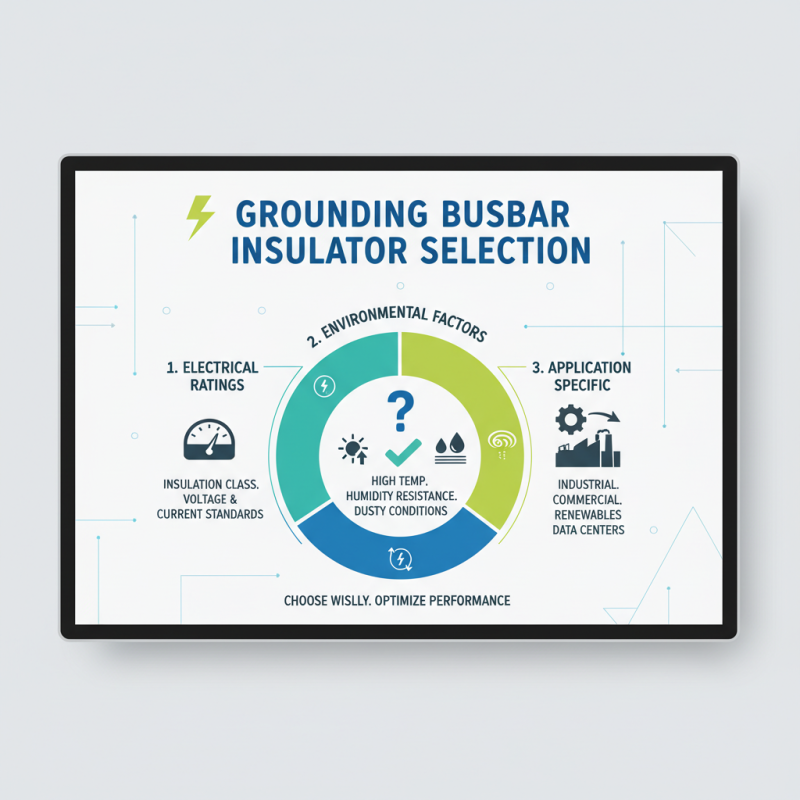
When choosing an insulator for a grounding busbar, it's essential to evaluate electrical insulation ratings and standards. Understanding the insulation class is crucial. Some materials perform well under high temperatures, while others excel in damp or dusty environments. Each application may have different requirements, impacting the selection process.
Tips: Always verify the insulation rating against your specific application needs. Seek information from multiple sources. This will help you make informed decisions.
Consider the environment where the busbar will be installed. A high insulation rating might be vital in humid or corrosive conditions. However, some materials may not withstand specific chemical exposures. This could lead to unexpected failures over time. Remember, not every insulation type is suited for all conditions.
Tips: Conduct regular assessments on the installed insulators. Monitor for signs of wear or environmental effects. Address issues early to avoid costly repairs. Proper maintenance can extend the lifespan of your busbar insulators.
Factors to Consider in Selecting the Right Size and Configuration of Insulators
Choosing the right grounding busbar insulator is crucial for safety and performance. Size is a major factor. The insulator must support the busbar while preventing electrical faults. An oversized insulator may result in unnecessary costs. On the other hand, an undersized one can lead to failures.
Configuration also plays a vital role. Different installations might require specific shapes or mounting options. For instance, some environments have limited space. In such cases, compact designs become essential. Evaluating installation conditions and potential environmental stressors is important.
Material selection cannot be neglected either. Insulators vary in durability and thermal performance. However, some materials may not perform well under extreme conditions. Understanding the specific needs of your application is key. This requires careful consideration. Each choice impacts the overall effectiveness of the grounding system.
Assessing Environmental Conditions and Their Impact on Insulator Performance
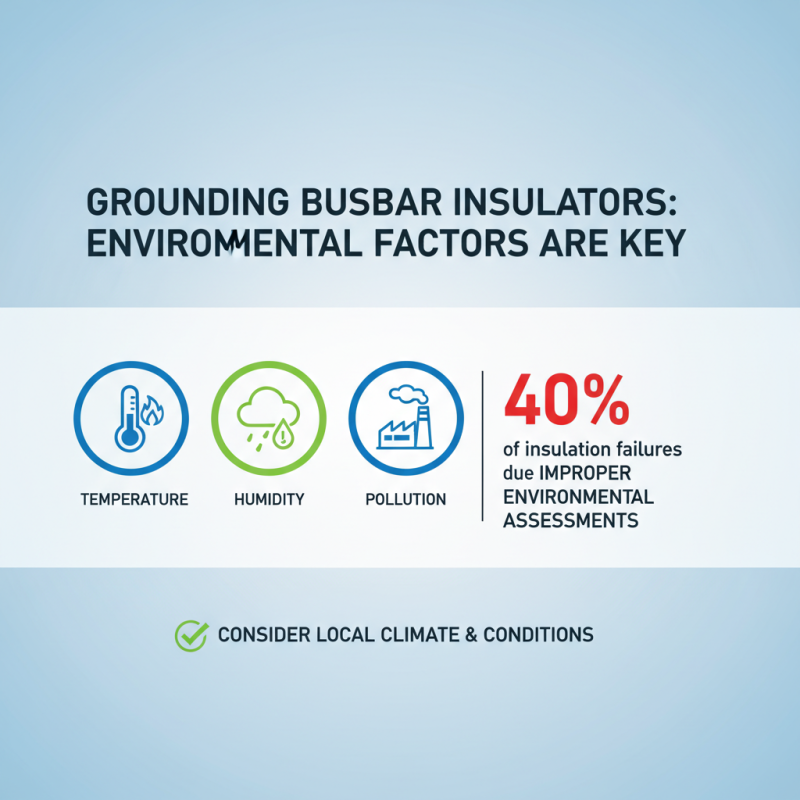
When selecting grounding busbar insulators, environmental conditions play a crucial role. Factors such as temperature, humidity, and pollution levels affect performance significantly. A recent industry report found that up to 40% of insulation failures are due to improper environmental assessments. This statistic highlights the need for careful consideration of local climate and conditions before choosing materials.
Humidity is one of the most impactful environmental factors. High humidity levels can lead to moisture accumulation on insulators. This moisture can create conductive paths, increasing the risk of electrical failure. The same report indicates that insulators exposed to high humidity may see a performance drop of 30% over time. Additionally, pollution, such as salt or industrial contaminants, can degrade material integrity. Protective measures might be necessary to mitigate these risks, especially in coastal or industrial areas.
Nonetheless, not all insulator materials perform uniformly in diverse environments. For instance, silicone-based insulators may offer better resistance in high pollution areas. Yet, they may struggle in very low temperatures. This inconsistency leads to potential pitfalls that need careful evaluation. Choosing the right insulator is not just a technical decision; it requires a deep understanding of environmental influences. Decisions made without such consideration can lead to costly maintenance.