Top 10 Material Insulator Types in China You Should Know?
The demand for reliable and efficient Material Insulators is on the rise in China. The insulator market is projected to grow significantly, with estimates suggesting a compound annual growth rate (CAGR) of over 6% by 2025. This growth reflects the increasing need for electrical safety and efficiency across various industries.
China's robust manufacturing capabilities and technological advancements have positioned it as a leader in insulator production. Material Insulators are essential for safeguarding electrical grids and ensuring optimal performance. The variety of materials, such as porcelain, glass, and polymer, presents unique advantages and challenges. Understanding these materials is crucial for selecting the right insulator for specific applications.
However, the sector faces challenges, such as environmental concerns and production costs. Innovations are necessary to address these issues while meeting safety standards. Regulatory compliance also demands constant adaptation. As industry experts indicate, ongoing research and development are vital to enhance performance and meet evolving market needs. Proper knowledge of Material Insulators can lead to better decision-making in various applications.
Overview of Insulating Materials and Their Importance in China
Insulating materials play a critical role in various industries across China. They ensure efficiency and safety in electrical systems and thermal applications. With an ever-growing demand for energy conservation, understanding these materials is more important than ever.
Several types of insulators are commonly used, including ceramics, glass, and polymers. Ceramic insulators are prevalent due to their high dielectric strength. However, they can be brittle. On the other hand, polymer insulators offer flexibility but may degrade under harsh environmental conditions. This inconsistency raises questions about their long-term reliability.
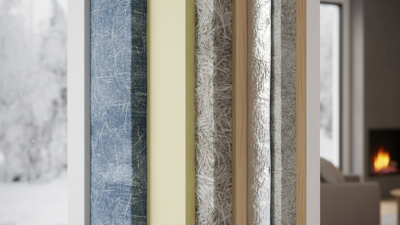
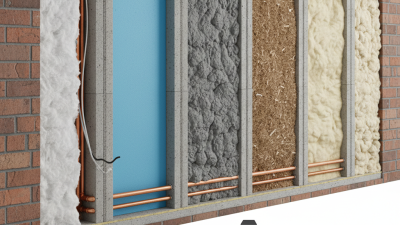
In the construction sector, insulating materials are vital. They help regulate building temperature, reducing energy costs. Yet, not all materials are environmentally friendly. The quest for greener options presents challenges. Companies often face trade-offs between performance and sustainability. This ongoing dilemma invites ongoing scrutiny and innovation in the field of insulation.
Key Characteristics of Effective Electrical Insulators
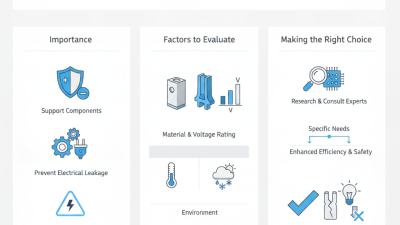
Electrical insulators play a crucial role in preventing electrical faults and ensuring safety in various applications. Among the key characteristics of effective electrical insulators are their high dielectric strength and thermal stability. These properties enable insulators to withstand high voltages and extreme temperatures without breaking down. According to the Global Insulation Market Report, the demand for high-performance insulators in China is projected to grow at a rate of 5% annually.
Material selection is vital. Ceramic, glass, and polymer insulators are widely used, each having unique benefits. For example, ceramic insulators offer excellent mechanical strength, while polymer insulators are lighter and easier to handle. It's essential to understand the applications for each type to ensure optimal performance.
Tips: Always consider environmental factors when selecting insulators. Temperature fluctuations and humidity can impact performance. Regular inspections can catch potential issues early. Choose insulators that not only fit the application requirements but offer durability and reliability in real-world conditions.
Top 10 Insulator Types Used in Chinese Industry
Insulators play a crucial role in the Chinese industry, ensuring the safe and efficient conduction of electricity. Among the top types of insulators, ceramic insulators are widely used. They provide excellent electrical resistance and mechanical strength. Another popular type is polymer insulators, known for their lightweight and flexibility. These materials reduce the risk of damage and enhance durability.
Glass insulators are also prominent, favored for their transparency and weather resistance. However, they can be comparatively heavier, which might limit their use in certain applications. Porcelain insulators make a strong case too, known for their traditional reliability, but they can break if exposed to extreme weather.
Tip: Always assess the specific application requirements when choosing an insulator. Different materials have distinct benefits and drawbacks that may affect performance and safety.
Composite insulators are gaining attention for their improved performance under harsh conditions. They combine the advantages of ceramic and polymer materials. However, they may require more careful handling and installation to maximize their effectiveness. Regular inspection is necessary to ensure their longevity and reliability in service.
Tip: Engaging with industry experts can help you make informed decisions about insulator types. Understanding the environment where they will be used ensures better performance and safety.
Applications and Industries Utilizing Various Insulator Materials
Insulators play a crucial role in various industries across China. Different materials provide specific benefits, impacting performance and durability. Ceramic insulators, often found in electric power applications, resist high voltages well. They are vital for ensuring safety in transmission systems.
Polymeric insulators have gained popularity due to their lightweight and flexible nature. They are ideal in environments where high mechanical strength is needed. This is evident in urban settings where space is limited. Glass insulators also serve well in harsh conditions. Their transparency and ability to maintain performance under extreme weather make them an industry favorite.
Tips: When selecting insulator materials, consider environmental exposure. Assessing climatic conditions can enhance longevity. Always evaluate the installation process. Improper handling may lead to damage and inefficiency.
In specialized applications, such as railways, composite insulators have become essential. They handle vibrations and resist pollution effectively. In renewable energy, silicon rubber insulators are increasingly used. Their performance in wind and solar applications showcases how diverse insulator materials can be. Rethinking existing choices may lead to better efficiency and sustainability.
Future Trends in Insulation Technology in China
The future of insulation technology in China is rapidly evolving. As the economy grows, so does the demand for energy efficiency. New insulation materials are emerging, driven by environmental concerns and technological advancements. These developments aim to improve thermal performance and reduce energy consumption in buildings.
One trend to note is the shift towards eco-friendly materials. Innovations in bioplastics and recycled content are becoming more prominent. These materials not only offer good insulation properties but also help reduce waste. However, there are challenges, such as cost and performance consistency. The industry still needs to refine these products for wider acceptance.
Additionally, smart insulation technologies are on the rise. These products can adjust to environmental changes. They enhance energy savings and optimize indoor comfort. However, integration remains complex. It requires further research to improve reliability and user acceptance. The growth of insulation technology in China shows promise, but some hurdles need addressing.
Top 10 Material Insulator Types in China You Should Know
| Insulator Type |
Thermal Resistance (m²·K/W) |
Common Applications |
Market Trend |
| Expanded Polystyrene (EPS) |
3.0 - 4.0 |
Building insulation, refrigeration |
Growing demand in construction |
| Polyurethane Foam (PU) |
5.0 - 7.0 |
Thermal insulation for roofs and walls |
Increasing use in energy-efficient buildings |
| Mineral Wool |
2.0 - 3.0 |
Commercial and industrial insulation |
Stable demand due to fire resistance |
| Fiberglass |
2.5 - 4.0 |
Home insulation, HVAC systems |
Consistent usage in residential applications |
| Cellulose Insulation |
3.5 - 4.5 |
Retrofit insulation for older buildings |
Growing interest in eco-friendly options |
| Aerogel |
7.0 - 8.0 |
High-performance insulation |
Emerging technology with high potential |
| Reflective Insulation |
Varies based on application |
Roofing, radiant barriers |
Increased adoption in hot climates |
| Polystyrene Foam (XPS) |
4.0 - 5.0 |
Foundation, walls, roofs |
Steady growth in construction sector |
| Spray Foam Insulation |
6.0 - 8.0 |
Sealing irregular spaces |
Increasingly popular for energy efficiency |
| Bio-based Insulation |
Similar to cellulose |
Sustainable building projects |
Rising interest in sustainability |