Leave Your Message

5 Best Electrical Conductor Insulator Suppliers?

Choosing the right Electrical Conductor Insulator supplier affects safety, efficiency, maintenance costs, and long-term project performance. These components support power transmission in substations, overhead lines, switchgear, and industrial systems. A reliable supplier should offer tested materials, consistent dimensions, traceable production, and technical support beyond a simple product catalogue.

This guide reviews five leading supplier options by examining product quality, manufacturing experience, certification practices, customization, delivery reliability, and customer service. The evaluation considers porcelain, glass, polymer, and composite insulators used in demanding electrical environments. It also looks at practical details, such as weather resistance, mechanical strength, thermal performance, and compatibility with existing conductor systems. Small differences matter.

Real-world selection is rarely perfect. A supplier may provide excellent engineering support but have longer lead times. Another may offer competitive prices while limiting custom designs. Buyers should verify test reports, factory capabilities, warranty terms, and regional compliance before placing an order. Independent inspection can also reveal issues that attractive brochures hide.

The suppliers discussed here are not ranked solely by brand visibility. Their value depends on the project’s voltage level, climate, installation method, and maintenance plan. Field experience suggests that the cheapest quotation is not always the safest investment. Careful comparison remains essential. Each recommendation should be reviewed against current specifications and site conditions, because supplier performance can change over time.
5 Best Electrical Conductor Insulator Suppliers?

Electrical Insulator Fundamentals: Dielectric Strength, Creepage, and 50/60 Hz

Choosing an electrical insulator supplier starts with understanding test data, not attractive catalog language. Dielectric strength describes the electric field an insulating material can withstand before breakdown. It is commonly expressed in kilovolts per millimeter. A higher value is useful, but it is not a complete design answer. Moisture, temperature, contamination, aging, and manufacturing voids can reduce real-world performance. Laboratory figures can look reassuring.

Creepage is the shortest surface path between conductive parts. Clearance is the shortest path through air. These distances are different, and confusing them can create unsafe assumptions.

On a dusty outdoor assembly, a longer creepage path helps limit leakage current. Ribs, grooves, and drip edges may extend the surface route without greatly enlarging the part.

Measure the actual profile. Ask suppliers how they control dimensions, surface finish, and inspection records. One overlooked mold defect can matter more than a polished datasheet.

At 50 or 60 Hz, insulation faces alternating electric stress sixty times each second. This frequency is low compared with switching systems, yet repeated stress still exposes weak interfaces.

Select materials and geometry for the operating voltage, not only the nominal rating. Include altitude, humidity, pollution level, thermal cycling, and expected service life in supplier discussions.

A useful qualification plan combines dielectric testing, creepage inspection, and sample aging. I would also request traceable reports. That step is easy to skip. Regrettably, it often becomes important after installation.
Supplier Selection Standards: IEC 60168, IEC 61109, ANSI C29.1, and 1,100 kV

For a 1,100 kV project, supplier ranking should begin with evidence, not catalog claims. IEC 60168 supports evaluation of post insulator mechanical and electrical performance. IEC 61109 applies to composite suspension and tension insulators for overhead lines. ANSI C29.1 defines widely used electrical test methods for insulators. These standards are not interchangeable. The supplier must identify the exact product family, voltage class, test sequence, and acceptance criteria.

Ask every shortlisted supplier for type-test reports, routine-test records, drawings, material declarations, and serial-number traceability. Review silicone housing, fiberglass rods, metal fittings, seals, and corona-control details. For 1,100 kV equipment, examine insulation coordination, pollution performance, switching-impulse withstand, and factory cleanliness. Independent laboratory testing adds confidence. Full-scale high-voltage testing may still be necessary.

Records matter. During audits, compare failure handling, not only production capacity. Ask how brittle fractures, flashover marks, or seal defects are investigated. No supplier file is perfect. Vague test dates deserve a pause. I would also challenge copied calculations and unusually short lead times. My review process is not flawless, especially when supplier data uses different test terminology. Require clear cross-references between IEC 60168, IEC 61109, ANSI C29.1, and project-specific 1,100 kV requirements.

NGK Insulators and Siemens Energy: Ceramic and Composite Grid Solutions

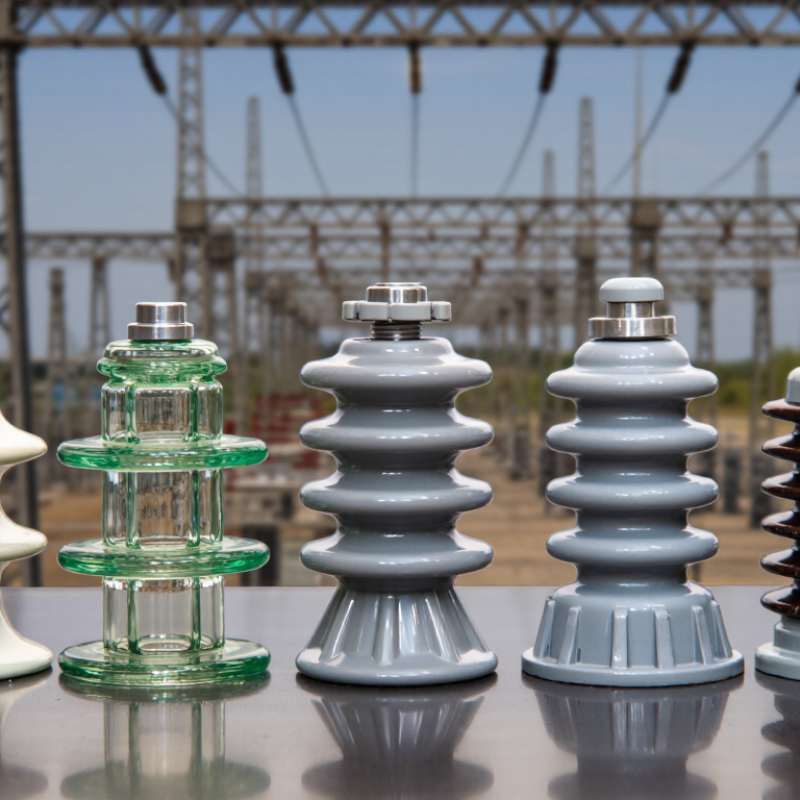
When comparing the five best electrical conductor insulator suppliers, grid operators should examine ceramic and composite technologies closely. Ceramic insulators offer strong mechanical stability, excellent heat resistance, and predictable performance over decades. They are useful in substations, transmission towers, and heavily polluted regions. Their glazed surfaces also resist moisture and surface tracking. However, ceramic units are heavier and can break under severe impact.

Composite insulators use a fiberglass core, polymer housing, and weather-shedding profiles. Their lighter weight simplifies tower installation and reduces transport demands. Field teams often prefer them near coastal areas because hydrophobic surfaces can limit contamination buildup. Still, aging polymer materials deserve careful attention. Ultraviolet exposure, poor sealing, and manufacturing defects may reduce service life. No supplier is perfect. Factory testing, traceable materials, and documented inspection procedures matter more than attractive specifications.

Tips: Ask for pollution-performance data, not just voltage ratings. Review mechanical load tests and aging results. Confirm spare-part availability before approval. During site visits, inspect end fittings, seals, and surface damage closely. A supplier should explain maintenance intervals in practical language. I would also request references from similar climates. This step is sometimes overlooked. It can reveal installation problems that brochures never mention. Engineers should compare total ownership costs, including transport, washing, replacement, and outage risks. Ceramic remains dependable, while composite solutions offer flexibility. The correct choice depends on local weather, structure design, and maintenance capability.

5 Best Electrical Conductor Insulator Suppliers? - Ceramic and Composite Grid Solutions

Evaluation Dimension Ceramic Insulator Solution Composite Insulator Solution Grid Application Practical Selection Consideration
Primary Materials Porcelain or other high-strength electrical ceramics with glazed surfaces Fiberglass-reinforced polymer core with a weather-resistant polymer housing Transmission and distribution overhead lines, substations, and switching equipment Match the material system to mechanical loading, pollution severity, climate, and maintenance strategy
Electrical Performance Stable insulating performance with well-established behavior under rated voltage and power-frequency conditions High insulation performance with hydrophobic polymer surfaces that can reduce surface leakage under suitable conditions High-voltage lines, busbars, line posts, suspension strings, and substation supports Review dry and wet withstand levels, creepage distance, pollution class, and impulse withstand requirements
Mechanical Characteristics High compressive strength and strong resistance to rigid mechanical loads; vulnerable to brittle fracture from severe impact Low weight, high tensile strength, and improved resistance to handling impact; performance depends on core and interface design Long-span conductors, compact structures, high-wind areas, and retrofit projects Check specified cantilever, tensile, torsional, and bending loads together with safety factors
Environmental Resistance Good resistance to ultraviolet exposure, moisture, and many outdoor conditions when properly glazed and designed Good resistance to moisture and contamination; polymer aging, erosion, and tracking must be assessed for the operating environment Coastal, industrial, desert, high-altitude, and heavy-rain transmission networks Use site-specific pollution data and verify resistance to salt, chemicals, temperature cycling, and ice or snow loads
Weight and Installation Typically heavier and may require more lifting capacity and structural support during installation Typically lighter, which can simplify transport, tower work, and installation in difficult-access locations Line construction, emergency replacement, tower uprating, and compact right-of-way projects Compare total installed cost rather than purchase price alone, including logistics, labor, fittings, and outage time
Inspection and Maintenance Visible surface damage and cracking can often be identified through visual, thermal, or electrical inspection methods Requires attention to housing condition, seals, interfaces, tracking, erosion, and hidden core-related defects Asset-management programs, live-line inspection, and scheduled maintenance systems Require documented inspection procedures, traceability, and access to replacement units and compatible fittings
Standards and Verification Product qualification commonly addresses electrical, mechanical, thermal, and pollution-performance tests Qualification should include housing aging, tracking and erosion, interface integrity, mechanical strength, and electrical tests Utility specifications, overhead-line design codes, and substation equipment standards Request independent test reports and confirm compliance with the standards specified by the project owner
Best-Fit Use Case Projects prioritizing long-established ceramic technology, rigid support, and predictable long-term material behavior Projects prioritizing low weight, reduced installation effort, compact design, and strong contamination performance New-build networks, refurbishment programs, renewable-energy interconnections, and substation upgrades Select by verified service requirements and lifecycle performance, not by material type alone
Recommended Procurement Data Voltage class, creepage distance, mechanical rating, dimensions, fittings, and test documentation Voltage class, housing profile, core rating, sealing system, mechanical rating, fittings, and aging-test documentation Conductor configuration, structure geometry, environmental loads, maintenance access, and outage constraints Create a technical compliance matrix covering design, testing, delivery, warranty, spare parts, and field support

Note: Final selection should be based on the applicable utility specification, local electrical regulations, environmental assessment, and verified product test results.

Hubbell, PPC Insulators, and MacLean Power Systems: Product Strengths

When comparing leading electrical conductor insulator suppliers, product strength matters more than catalog size. One established supplier offers a broad range of porcelain and polymer insulators for distribution and transmission networks. Its strength is application coverage. Utilities can match voltage class, mechanical load, and mounting style with fewer substitutions. In field inspections, weather-resistant polymer housings often reduce surface contamination concerns, while porcelain remains valued for rigidity and familiar maintenance practices. The better choice depends on exposure, not fashion.

Another supplier focuses strongly on polymer insulators and compact line designs. These products can reduce weight and simplify handling on crowded poles. Their sealed interfaces and durable sheds are useful in coastal, dusty, or industrial environments. A third supplier stands out for integrated line hardware, bracing, and connection systems. This approach can improve fit between the insulator and surrounding equipment. Installation crews often appreciate fewer separate components. Small details matter.

Check the evidence carefully. Product data should identify electrical ratings, mechanical strength, creepage distance, material performance, and applicable utility standards. Ask for test reports and installation guidance. Field support also matters when a design changes late. I would not select a supplier from price alone. That is an easy mistake. Catalog descriptions can sound stronger than real maintenance records. Before approval, compare inspection data, replacement access, and performance in similar climates. Even experienced teams can overlook bolt compatibility or clearance near energized conductors. Controls must remain practical, documented, and verified by qualified engineers.

Supplier Comparison: Pollution Class, Mechanical Load, Cost, and 30-Year Life

5 Best Electrical Conductor Insulator Suppliers?

Comparing electrical conductor insulator suppliers requires more than checking unit price. Pollution class should match the installation environment. Coastal salt, cement dust, and industrial smoke can increase surface leakage and flashover risk. Review the specified pollution class, creepage distance, material formulation, and test evidence. A supplier should explain how its design performs after contamination and wetting cycles.

Mechanical load deserves equal attention. Confirm tensile, cantilever, torsional, and impact ratings for the complete insulator assembly. Check fitting dimensions, conductor weight, wind pressure, ice loading, and short-circuit forces. A strong-looking product may still fail at its connection hardware. Ask for routine and type-test records, production traceability, and independent laboratory data. Field references are useful, but they are not proof alone.

Cost comparisons should include transport, replacement access, cleaning, inspection, and outage exposure. The lowest purchase price can become expensive after repeated maintenance.

A 30-year service life is a design target, not a promise. UV exposure, thermal cycling, pollution, and installation quality can shorten it. Our first shortlist was too optimistic because it treated laboratory life as field life. That mistake is worth avoiding. Not just price. Require clear warranty terms, realistic maintenance guidance, and evidence from similar climates before selecting among the five strongest suppliers.