Choosing a China top Electrical Standoff Insulator manufacturer requires more than comparing prices or browsing attractive product photos. Engineers must examine material quality, dimensional accuracy, voltage resistance, thermal stability, and production consistency. A small ceramic chip or uneven mounting hole can create serious installation problems inside a compact control cabinet. Sometimes, the smallest component carries the greatest responsibility.
Dr. R. Bartnikas, a respected authority on electrical insulation, stated, “Insulation performance must be judged within the complete electrical system, not in isolation.” This principle remains valuable when evaluating an Electrical Standoff Insulator supplier. A reliable manufacturer should understand creepage distance, clearance requirements, dielectric strength, mechanical loading, and environmental exposure. These details matter in switchgear, busbar supports, power supplies, industrial controls, and high-voltage assemblies.
China has many capable manufacturers, but quality varies between factories. The strongest suppliers combine tested raw materials with precise machining, controlled firing or molding processes, and documented inspection procedures. Ask for technical drawings, tolerance data, test reports, and application guidance. Visit the production line when possible. See the details yourself.
However, no supplier is perfect. Even a well-established factory may need improvement in customization, delivery control, or technical communication. That weakness should not be hidden. It should be measured, discussed, and corrected. This guide will compare the practical capabilities behind leading Chinese manufacturers, helping buyers identify dependable Electrical Standoff Insulator partners for demanding applications.
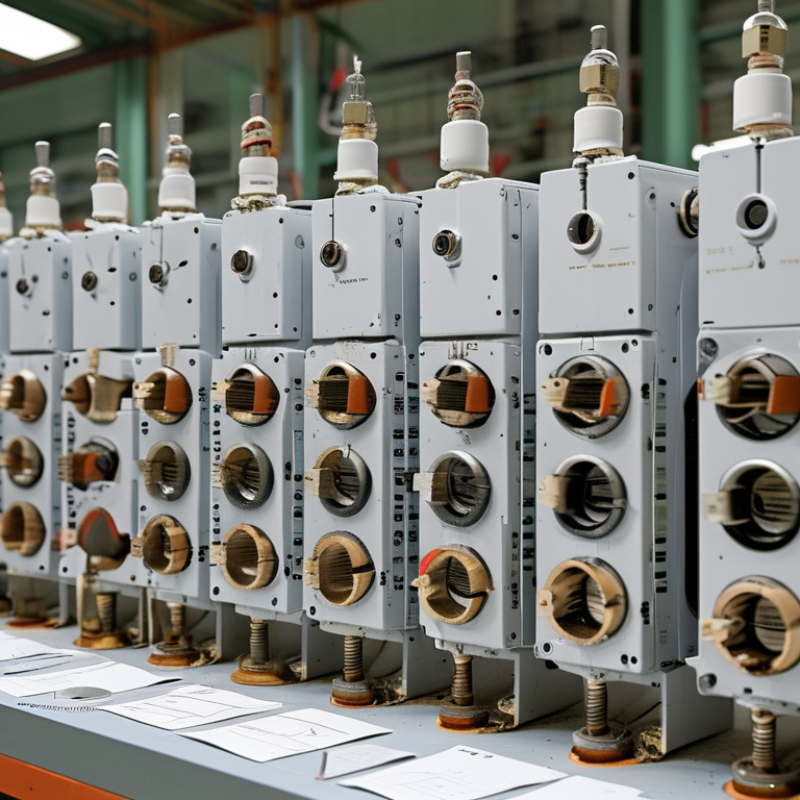
Electrical standoff insulators support and separate energized conductors from grounded surfaces. They maintain a controlled air gap while carrying mechanical loads. Common materials include ceramic, glass, and reinforced polymer compounds.
Their role is practical. A standoff insulator helps prevent arcing, leakage current, and accidental contact inside switchgear, control cabinets, busbar systems, and outdoor equipment. Designers check voltage, creepage distance, clearance, temperature, vibration, and pollution severity. IEC 60112 provides a method for evaluating comparative tracking performance. IEC 60664-1 also links insulation coordination with overvoltage, material group, and operating environment. A few millimeters can matter.
Grid expansion increases this demand. The International Energy Agency reported in Electricity Grids and Secure Energy Transitions that annual global grid investment must rise above 600 billion US dollars by 2030. Industry reports also forecast steady growth in electrical insulation materials, commonly estimating annual growth above 6 percent through the decade. These figures support stronger demand, but they do not guarantee reliable components.
Manufacturing quality still decides field performance. A precise mold, clean surface, stable resin, and controlled curing process reduce defects. I have seen installation errors defeat good insulation. Over-tightened hardware can crack a ceramic body. Moisture and dust can also reduce surface resistance. Therefore, a responsible manufacturer should provide dimensional inspection, dielectric testing, material traceability, and clear installation limits. One detail remains easy to overlook: laboratory results may not represent years of heat, vibration, and contamination. Real service feedback deserves more attention.
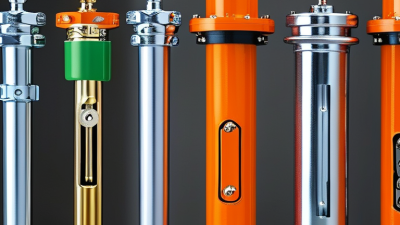
China’s top electrical standoff insulator manufacturers usually begin with material selection, not appearance. In field projects, epoxy resin is valued for mechanical strength and stable insulation. Porcelain offers excellent heat resistance and long outdoor service. Silicone rubber handles pollution and moisture well, but its surface design needs careful control.
Metal inserts are commonly made from corrosion-resistant steel, brass, or plated alloys. Their threads must fit accurately. Poor alignment can create stress inside the insulating body. That stress may remain hidden during assembly, then appear after thermal cycling. It is a small detail.
Design features directly influence reliability. A longer creepage distance helps resist surface tracking in dusty or humid environments. Adequate clearance protects against arcing through air. Rounded edges reduce electric-field concentration, especially near conductive inserts. For outdoor equipment, sheds and drainage paths can limit water films on the surface.
A dependable manufacturer should verify dielectric strength, dimensional tolerance, torque resistance, and temperature performance. Factory inspection records matter. So does practical experience with installation tools and cable weight. Laboratory tests cannot reproduce every site condition. This is where product selection becomes less certain. A design that performs well in clean indoor equipment may fail near salt spray or industrial dust. Engineers should review voltage, pollution level, mounting position, and maintenance access before approving a standoff insulator. Small compromises in material or geometry can become expensive faults.
| Material or Design Feature | Typical Technical Range or Specification | Primary Design Benefit | Typical Applications |
|---|---|---|---|
| High-Alumina Ceramic | Alumina content commonly 95%–99.5%; dielectric strength approximately 10–20 kV/mm; volume resistivity generally above 1014 Ω·cm | High insulation reliability, strong compressive strength, good wear resistance, and stable performance at elevated temperatures | High-voltage assemblies, power supplies, switchgear, transformers, and industrial control equipment |
| Steatite Ceramic | Dielectric strength commonly about 8–15 kV/mm; thermal conductivity typically around 2–4 W/(m·K); low moisture absorption after proper firing | Cost-effective electrical insulation with good dimensional stability and machinability before firing | General-purpose terminal blocks, low- and medium-voltage supports, heating equipment, and instrumentation |
| Glass-Filled Epoxy | Dielectric strength often approximately 15–25 kV/mm; thermal conductivity commonly 0.2–0.5 W/(m·K); service temperature depends on resin system | Lightweight construction, strong adhesion to metal inserts, and flexible molding options for complex geometries | Busbar supports, circuit protection equipment, molded assemblies, and indoor electrical panels |
| Silicone Rubber | Typical continuous-use range approximately −50°C to +180°C; dielectric strength commonly about 20–30 kV/mm; excellent weathering resistance | Elastic shock absorption, hydrophobic surface behavior, and reliable outdoor performance over a wide temperature range | Outdoor electrical equipment, vibration-prone assemblies, cable supports, and environmental sealing applications |
| Threaded Metal Insert | Commonly manufactured from stainless steel, nickel-plated steel, brass, or other corrosion-resistant alloys; thread size selected according to mechanical load | Provides secure mounting, repeatable assembly, and improved resistance to loosening when correctly torqued | Panel mounting, busbar supports, terminal assemblies, and mechanical-electrical connection points |
| Creepage Distance | Specified along the insulating surface; required distance depends on working voltage, pollution degree, material group, and applicable insulation standard | Reduces surface leakage and tracking risk, particularly in humid, dusty, or contaminated environments | High-voltage switchboards, power converters, industrial controls, and outdoor power equipment |
| Clearance Distance | Measured through air between conductive parts; determined by rated voltage, transient overvoltage, altitude, and insulation coordination requirements | Helps prevent arcing and flashover under normal operating and transient conditions | High-voltage terminals, relay systems, power distribution units, and switchgear |
| Anti-Tracking Surface Profile | Ribs, grooves, skirts, and raised shoulders are used to lengthen the leakage path and reduce contamination accumulation | Improves resistance to surface tracking, partial discharge, and pollution-related insulation failure | Outdoor insulators, dusty industrial environments, traction equipment, and medium-voltage assemblies |
| Sealing and Moisture Protection | May include molded seals, compression interfaces, O-rings, protective coatings, or sealed metal-to-insulator joints | Limits moisture ingress, corrosion, and insulation degradation in humid or outdoor service conditions | Outdoor cabinets, renewable-energy equipment, marine-related systems, and exposed control panels |
| Mechanical Load Capacity | Design should consider tensile, compressive, cantilever, torque, vibration, and short-circuit electrodynamic forces; values depend on geometry and mounting method | Maintains structural integrity and conductor alignment during installation, vibration, and fault events | Busbar systems, switchgear, motor controls, battery equipment, and power distribution assemblies |
| Applicable Verification Tests | Insulation resistance, dielectric withstand, partial discharge where applicable, dimensional inspection, thermal aging, flammability, and mechanical load testing | Confirms electrical insulation, environmental durability, dimensional consistency, and mechanical safety | Prototype qualification, incoming inspection, production quality control, and compliance documentation |
Note: Technical values are representative engineering ranges. Final material selection, creepage, clearance, dimensions, and test requirements should be verified against the rated voltage, operating temperature, pollution level, mechanical load, and applicable standards such as IEC 60664-1 and IEC 60168.
A reliable electrical standoff insulator manufacturer needs disciplined production, not only attractive product photographs. The process begins with approved raw materials, including ceramic, epoxy, or other specified insulating compounds. Engineers verify moisture, particle size, resin ratio, and batch identity before forming begins. Small variations can affect dielectric strength.
Forming methods depend on the design. Ceramic parts may be pressed, dried, machined, glazed, and sintered in controlled-temperature kilns. Epoxy parts require accurate mixing, mold filling, vacuum treatment, and curing. Operators inspect surfaces for cracks, voids, sharp edges, and incomplete filling. Dimensions are checked with calibrated tools. Thread alignment matters. A minor offset can complicate installation.
Quality control should follow documented procedures and applicable requirements, such as IEC or equivalent national standards. Routine tests may include insulation resistance, withstand voltage, dimensional inspection, and mechanical loading. Type testing can examine thermal cycling, aging, and environmental performance. Each batch should remain traceable to materials, equipment settings, operators, and test records. ISO 9001-based systems can strengthen consistency, but certification alone proves little.
Practical experience still exposes weaknesses. A clean warehouse does not guarantee stable production. A passed sample cannot represent every unit. Manufacturers should review failed tests openly and adjust tooling, curing time, or kiln profiles. Some records may need clearer acceptance limits. Independent audits and customer-specific testing add useful evidence before long-term electrical service.
Quality verification for high-voltage insulators commonly references standardized impulse shapes. The lightning impulse is defined as 1.2/50 μs, while the switching impulse is commonly represented as 250/2500 μs. The curves below use normalized voltage values to illustrate the required waveform profiles used during insulation testing.
Choosing a top electrical standoff insulator manufacturer requires more than comparing prices. The supplier should understand voltage stress, creepage distance, mechanical loading, and thermal aging. Ask for test records based on IEC 60168 and IEC 60273 requirements. These standards help verify insulation performance, dimensions, and mechanical strength.
Market data also matters. Grand View Research reported that the global electrical insulation materials market reached approximately USD 10.6 billion in 2023. It forecasts steady growth through 2030, driven by grid upgrades and industrial electrification. This growth attracts many suppliers. However, a large factory does not always mean better quality. Review production equipment, material traceability, and process controls. Confirm whether ceramic, epoxy, or composite materials suit your operating environment. Salt spray, humidity, dust, and vibration can change the correct choice.
Tips: Request three recent inspection reports and one sample batch. Check dielectric strength, torque resistance, dimensional tolerance, and temperature ratings. Visit the facility if possible. A video tour helps, but it cannot replace an audit. Also, examine packaging details; cracked threads or loose inserts may indicate weak handling controls. Some suppliers provide impressive certificates but limited application guidance. That is a warning. My own assessment would not rely on one test result, because even reputable manufacturing processes can produce occasional defects. Ask how the supplier handles nonconforming parts and corrective actions.
Electrical standoff insulators support energized conductors while separating them from grounded metalwork. Their role reaches far beyond a single switchboard. In substations, they hold busbars steady during short-circuit forces. In low-voltage cabinets, they maintain clearance around terminals and copper links. Power converters, capacitor banks, rail systems, and renewable-energy inverters also depend on stable insulation.
The International Energy Agency’s Electricity 2024 report projects global electricity demand to grow by an average of 3.4% annually from 2024 to 2026. More generation and grid equipment mean more insulation points to inspect. Wind and solar installations add another challenge: moisture, ultraviolet exposure, salt fog, and frequent thermal cycling. A suitable standoff design must balance dielectric strength, creepage distance, mechanical load, and heat resistance. Small dimensional errors can become serious field problems.
Material selection matters. Epoxy supports compact molded designs, while porcelain offers proven outdoor durability. Composite materials can reduce weight, but their long-term surface performance requires careful validation. Tests should include withstand voltage, partial-discharge screening, torque checks, and temperature cycling. IEC 60660 provides a recognized framework for testing indoor post insulators above 1,000 volts. Still, laboratory results never replace installation discipline. We have seen failures linked to over-tightened fasteners and contaminated surfaces, not defective insulation. That deserves reflection. Reliable manufacturing requires traceable materials, controlled molding, accurate dimensions, and application-specific testing.