Choosing a China Top Heat Resistant Insulator Supplier requires more than comparing prices and product photographs. The right supplier must demonstrate thermal stability, electrical safety, dimensional consistency, and dependable production control. A Heat Resistant Insulator may face intense furnace heat, repeated cooling, vibration, moisture, or chemical exposure. Small weaknesses can become visible cracks, leakage, or unexpected downtime.
Dr. W. David Kingery, a respected authority in ceramic materials, stated, “Ceramics are inorganic, nonmetallic materials.” This simple definition supports an important purchasing principle: ceramic insulation must be judged by its structure, not its appearance alone. Experienced buyers should review alumina content, maximum operating temperature, dielectric strength, thermal shock resistance, and tolerance data. They should also request test reports, inspection records, and samples from the same production line.
Performance matters most.
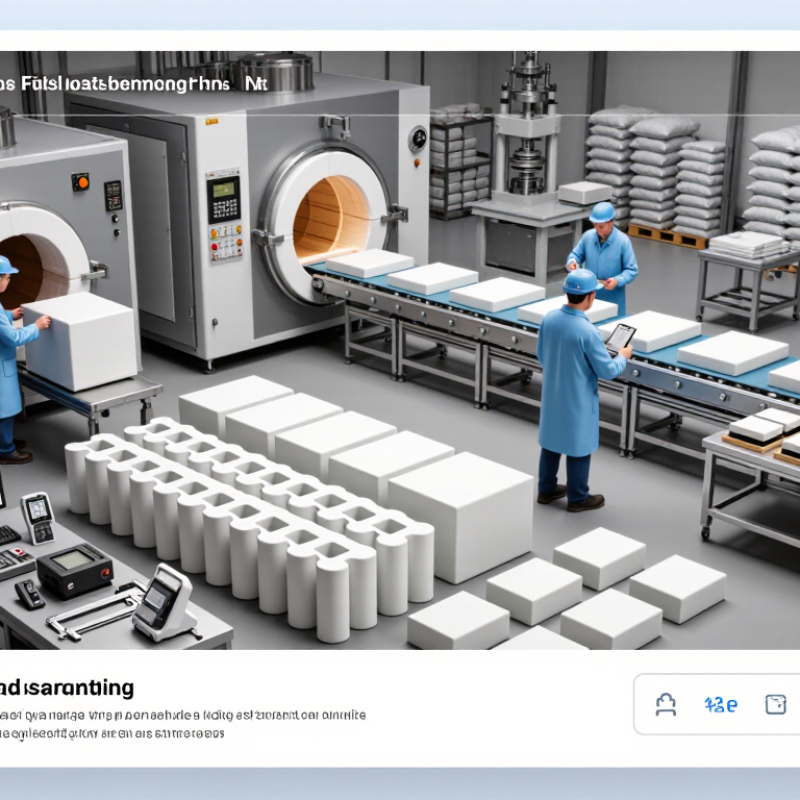
A reliable Chinese manufacturer should explain its raw materials, pressing or molding process, firing controls, and final inspection methods. Factory experience becomes clearer when technical staff can discuss real applications, not only catalogue specifications. Ask how the supplier handles warpage, surface defects, and batch variation. These details are easy to overlook. They should not be.
This guide examines supplier qualifications, material choices, certifications, customization capacity, delivery reliability, and after-sales support. It also considers an uncomfortable truth: no supplier is perfect, and no laboratory result guarantees field performance. A product that survives a controlled test may behave differently beside a furnace door or heating element. Careful validation remains necessary. The strongest supplier is not always the cheapest. It is the one that provides evidence, communicates limits honestly, and improves when problems appear.
China Top Heat Resistant Insulator Supplier?
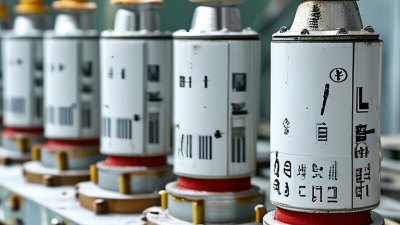
Chinese suppliers commonly produce heat-resistant insulators from alumina ceramic, steatite, porcelain, mica, and glass-fiber composites. Alumina is widely selected for furnace supports, thermocouple parts, and electrical feedthroughs. Depending on purity and design, alumina components can operate above 1,000°C. Their melting point is approximately 2,050°C, but continuous service temperatures are lower.
Steatite offers stable insulation at a lower cost. Porcelain remains useful for outdoor and medium-voltage assemblies. Mica withstands rapid heating and cooling, making it suitable for heating elements and thermal barriers. Glass-fiber silicone parts provide flexibility, although their temperature limits require careful checking. IEC 60672 provides a recognized framework for ceramic and glass insulating materials. Buyers should also request dielectric-strength, thermal-shock, and moisture-resistance test records.
The International Energy Agency’s Electricity 2024 report expects global electricity demand to grow by about 3.2% annually from 2024 to 2026. This growth increases demand for reliable insulation in power equipment, industrial heating, and electrical controls. Material choice still depends on voltage, temperature, mechanical load, and atmosphere. A supplier may quote a higher temperature rating than the finished assembly can safely achieve. That detail is easy to miss. Production experience shows that sharp corners, pores, and poor glazing can trigger premature failure. Independent testing remains valuable, even when factory certificates look complete.
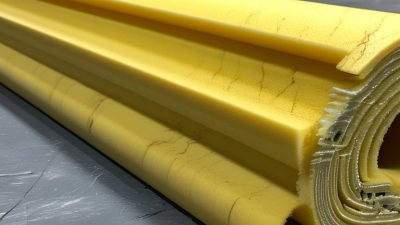
Thermal ratings show how an insulation system handles heat over time. Class 155, often called Class F, supports a maximum system temperature of 155°C. Class 180, or Class H, allows 180°C under defined test conditions. Class 200 and Class 220 provide higher thermal endurance, but they do not guarantee unlimited service life. Moisture, vibration, contamination, and frequent temperature changes still accelerate aging.
A higher rating is not automatically better. Class 220 materials may increase cost or complicate processing if the equipment operates below 155°C. Engineers should check winding temperature, hot-spot temperature, ambient conditions, and temperature rise together.
Mica, aramid paper, polyester film, glass fiber, and compatible resins can perform differently within the same thermal class. The complete insulation system matters more than one impressive material datasheet.
A practical supplier review should include thermal-aging evidence, batch traceability, thickness tolerance, dielectric strength, and dimensional stability. Test methods should reference recognized standards, such as IEC 60085 and IEC 60216, where applicable.
During factory evaluation, inspect storage conditions and resin curing records. Small gaps matter. I have seen excellent samples fail after poor lamination or uncontrolled moisture.
The supplier should explain test limits clearly and provide consistent production data, not only a certificate. Thermal class is a starting point, not the whole design.
China Top Heat Resistant Insulator Supplier?
Key IEC 60216 Tests for Thermal Endurance and Aging Performance
For high-temperature insulation, supplier claims need test evidence, not attractive charts. IEC 60216 evaluates thermal endurance through controlled aging and electrical strength measurements. Samples remain in ovens at several temperatures, with defined humidity and ventilation. Technicians inspect cracks, embrittlement, discoloration, and mass changes. They then measure breakdown strength or another agreed endpoint. The results support a thermal endurance profile and temperature index.
A reliable evaluation compares aging times across temperatures, not one dramatic result. Arrhenius analysis estimates insulation life under continuous heat exposure. However, this model assumes a consistent degradation mechanism. That assumption can fail when moisture, vibration, chemicals, or rapid temperature cycling dominate service conditions. Real installations are less tidy. I have seen insulation pass oven aging yet perform poorly after repeated mechanical movement. Therefore, test reports should state specimen thickness, conditioning, electrode design, failure criteria, and data scatter. Missing details deserve questions.
Tips: Request raw aging data and the calculated temperature index. Check whether the tested material matches the production grade. Ask for independent laboratory involvement when the application is safety-critical. Also compare IEC 60216 results with humidity and cycling tests. Thermal endurance is not a promise of infinite life. It is a measured estimate, with boundaries that engineers must respect.
| Evaluation Dimension | Relevant IEC 60216 Concept | Typical Test Practice | Key Data to Request | Supplier Review Point |
|---|---|---|---|---|
| Applicable standard | IEC 60216 series evaluates the thermal endurance of electrical insulating materials and systems. | Use the applicable edition and part of IEC 60216 together with the relevant product or system standard. | Standard edition, test method, specimen configuration, conditioning requirements, and deviations. | A credible report should identify the exact standard edition and test scope rather than only stating “IEC 60216 compliant.” |
| Material or insulation system | Thermal endurance data may apply to a material, combination of materials, or complete insulation system, depending on the test design. | Test representative production samples using the same formulation, reinforcement, coating, adhesive, and processing route intended for supply. | Material construction, thickness, resin or binder type, reinforcement, curing process, and lot identification. | Confirm that the tested construction matches the proposed product; test results are not automatically transferable between different systems. |
| Aging temperature levels | Thermal endurance is determined from property retention after exposure at multiple elevated temperatures. | Select several temperatures that produce measurable aging within a practical test period while avoiding unrelated failure mechanisms. | Set temperatures, actual chamber temperatures, tolerance, exposure duration, and number of specimens per condition. | Temperature spacing and test duration should support a defensible time-to-endpoint relationship. |
| Aging environment | Thermal aging results depend on the surrounding atmosphere and environmental conditions. | Use controlled air circulation or another specified environment, with documented chamber calibration and monitoring. | Airflow or atmosphere, humidity where applicable, chamber uniformity, calibration records, and sample placement. | Poorly controlled oxygen supply, humidity, or temperature distribution can distort aging rates. |
| Initial property measurement | Aging is assessed by comparing post-aging performance with the initial or reference condition. | Measure the selected property before thermal exposure using a defined and repeatable procedure. | Initial mean, individual results, conditioning time, measurement uncertainty, and test equipment. | Initial values should be stable and sufficiently above the specified endpoint to allow meaningful aging analysis. |
| End-of-life criterion | The endpoint is the defined degradation level at which the selected property no longer meets the acceptance criterion. | Use a property-specific endpoint, such as a specified retained mechanical strength or electrical breakdown performance. | Endpoint definition, pass/fail threshold, failure mode, statistical rule, and raw measurements. | The endpoint must reflect the intended application and should not be replaced by an arbitrary visual-aging limit. |
| Property selection | Thermal endurance can be based on mechanical, electrical, or other relevant performance properties. | Select the property most closely related to the insulation’s intended service failure mode. | Tensile strength, elongation, flexural strength, dielectric strength, insulation resistance, or another justified property. | For electrical insulation, include evidence that the selected property is relevant to the actual design and operating stresses. |
| Time-to-endpoint data | The time required to reach the endpoint is determined at each aging temperature. | Remove specimens at scheduled intervals and record the property until the endpoint is reached or adequately bracketed. | Exposure intervals, endpoint time at each temperature, censored or incomplete results, and specimen-level data. | A single final inspection is insufficient for establishing a reliable aging curve. |
| Arrhenius analysis | For materials following an applicable Arrhenius relationship, log lifetime is related to reciprocal absolute temperature. | Fit the temperature-life data and evaluate the linearity and statistical quality of the relationship. | Activation energy, regression equation, slope, intercept, confidence limits, residuals, and extrapolation range. | Do not extrapolate beyond the validated temperature range without technical justification; non-Arrhenius behavior may occur. |
| Thermal endurance characteristic | The thermal endurance characteristic expresses the relationship between temperature and time to the defined endpoint. | Report the calculated thermal endurance profile and the temperature associated with the selected reference lifetime, when applicable. | Thermal endurance temperature, reference lifetime, confidence interval, endpoint property, and calculation method. | The reported temperature is meaningful only with its endpoint, confidence information, and test conditions. |
| Specimen sampling | Statistical reliability depends on representative specimens and adequate replication. | Use specimens from defined production lots and distribute samples across aging temperatures and exposure intervals. | Lot numbers, sample quantity, specimen dimensions, conditioning history, and sampling plan. | Results from one convenient sample should not be treated as evidence of consistent production performance. |
| Physical aging observations | Visual changes can support failure analysis but do not necessarily define electrical insulation life. | Record cracking, embrittlement, discoloration, deformation, delamination, mass change, or surface deposits alongside quantitative results. | Photographs, dimensional changes, mass change, observed failure mode, and correlation with measured properties. | Visual appearance alone should not be used to assign a thermal class or service life. |
| Electrical verification | Electrical properties may be selected when dielectric performance is the critical aging-limiting function. | After thermal aging, perform the specified dielectric or insulation test using controlled conditioning and test voltage procedures. | Breakdown voltage, insulation resistance, partial-discharge or dielectric-loss data where relevant, plus test configuration. | Verify that electrode geometry, thickness, moisture condition, and voltage ramp are documented and repeatable. |
| Quality and traceability | Reliable thermal endurance data requires controlled procedures, calibrated equipment, and traceable records. | Review laboratory competence, equipment calibration, environmental records, raw data, calculations, and report approval. | Calibration certificates, laboratory accreditation where applicable, raw data, revision history, and corrective-action records. | Prefer current, traceable reports that clearly link the tested samples to the supplied production specification. |
Note: IEC 60216 thermal endurance results are test-specific. They should be interpreted together with the insulation system design, operating temperature, electrical stress, mechanical stress, moisture exposure, and the applicable product standard.
Choosing a Chinese heat-resistant insulator supplier requires evidence beyond a polished catalogue. The ISO Survey 2022 recorded more than 1.2 million ISO 9001 certificates worldwide. Request the supplier’s certificate number, issuing body, scope, and expiry date. The scope should cover ceramic, mica, or high-temperature insulation production, not only office management. Ask for recent process records, including furnace temperature logs, dimensional checks, and batch traceability. A certificate helps. It does not guarantee stable performance.
MOQ deserves a written, product-specific comparison. Ask whether the minimum applies to each size, material, or total order value. A 1,000-piece MOQ may appear reasonable, but it becomes expensive when three diameters require separate tooling. Request sample pricing, tooling charges, and the cost of a pilot batch.
Lead time should include raw-material preparation, production, inspection, and export documentation. UNCTAD’s Review of Maritime Transport 2024 reported that Suez Canal transits fell sharply during 2024 disruptions, increasing routing uncertainty. Therefore, ask for both factory lead time and realistic door-to-door delivery time. Require a shipment schedule with buffer days. I would not accept “fast delivery” without dates.
One practical weakness remains: supplier promises can change after a deposit. A staged order, independent inspection, and written acceptance criteria reduce that risk.
In practical sourcing, I check the operating temperature first. A ceramic part rated for 1,000°C may fail under repeated thermal cycling. Ask for thermal shock results, dielectric strength, bulk density, and dimensional tolerance. Samples should face the same heating and cooling pattern as the final equipment. Small details matter. A 0.5-millimeter gap can affect assembly.
Export data can help compare suppliers beyond online claims. Review customs records by product description, HS classification, destination, shipment frequency, and declared unit value. Repeated exports to furnace, power, or machinery markets may indicate production experience. However, trade data is imperfect. HS codes can group different materials, while declared values may exclude tooling or freight. Treat it as evidence, not proof.
A reliable supplier should provide material certificates, inspection reports, and traceable batch numbers. Confirm whether testing uses recognized international methods. Request photos of machining, glazing, packing, and pallet protection. Poor packaging can damage fragile insulators before installation. I also prefer suppliers that explain failed samples openly. Perfect claims deserve questions. Lead time, replacement procedures, mold ownership, and export documentation should be written clearly before payment. Temperature ratings must match real working conditions, not laboratory marketing language.